
Introduction
If you are wondering how to clean Chesterfield sofa buttons without damaging the upholstery, you are probably looking at those deep, tucked folds and realising a quick wipe will not do the job. A Chesterfield sofa is designed to have depth, shadow and shape, but that same deep button detail can collect dust, crumbs, pet hair and body oils in places a normal cloth cannot reach.
The problem is that most sofa cleaning advice is written for flat cushions. A Chesterfield is different. The button areas are pulled under tension, which means too much force, too much moisture or the wrong cleaner can mark the fabric, dull leather, flatten velvet pile or loosen the tufting over time.
That can feel frustrating when the rest of the sofa looks clean but the buttons still look dusty or tired. It is tempting to scrub harder, spray cleaner into the creases or attack the folds with a toothbrush. Unfortunately, those quick fixes often create the bigger problem: water marks, colour changes, cracked leather or distorted buttoning.
This care guide explains how to clean Chesterfield sofa buttons safely, using soft brushes, a soft cloth, controlled moisture and material-specific cleaning methods. The aim is simple: lift dirt from the deep button areas without disturbing the structure that makes your Chesterfield sofa so distinctive.
Why Chesterfield Sofa Buttons Need Different Cleaning
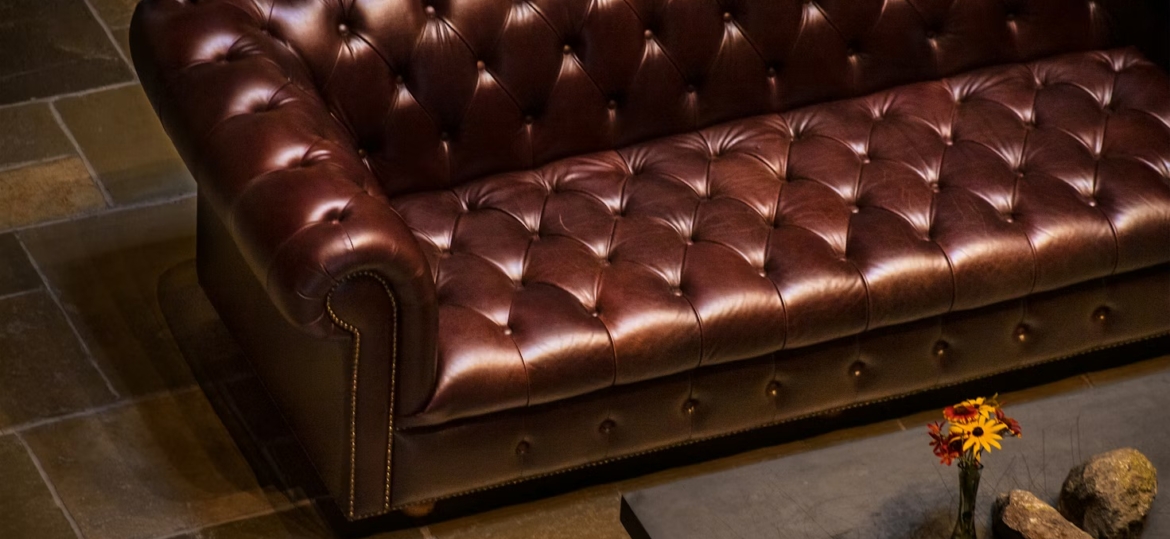
A deep-button Chesterfield is not just a sofa with decorative buttons attached to the surface. The upholstery is pulled inward, secured and shaped to create the classic tufted pattern. That creates small valleys around every button, and those valleys behave like little dust pockets.
The most useful way to think about the job is this: you are not really cleaning the button first. You are cleaning the folds around it. The button itself is usually only a small part of the visible dirt. Most of the build-up sits on the sloping sides of the tuft, where crumbs, fibres and fine dust settle out of reach.
This is why a fast wipe across the seat often leaves the button areas looking dull. It glides over the top and misses the recesses. Pushing harder is not the answer either, especially on leather sofas where repeated pressure can polish one area more than the rest, or on velvet where the pile can crush.
A better approach is slow, dry and precise. Start by removing loose debris before introducing any cleaning product. This reduces the chance of turning dry dust into a muddy mark, which is one of the most common mistakes people make when cleaning detailed upholstery.
A practical tip from real-life sofa maintenance is to clean the buttons when natural daylight is hitting the sofa from the side. Low side light makes trapped dust easier to see. You will often spot dirt in creases that looked clean from above.
The Tools You Need Before You Start
You do not need a complicated cleaning kit for routine button care. In fact, the safest tools are usually simple ones. What matters is softness, control and using the right product for the upholstery.
Useful tools include:
- A vacuum cleaner with a soft brush attachment or narrow crevice tool
- Soft brushes, such as an upholstery brush, clean paintbrush or very soft toothbrush
- A clean microfibre soft cloth
- Cotton buds for tight creases
- A dry towel for blotting
- Leather cleaner for a leather Chesterfield
- Fabric-safe upholstery cleaner for fabric models
- A velvet brush for velvet upholstery
Avoid hard scrubbing brushes, metal picks, bleach, ammonia cleaners, alcohol wipes, furniture polish and general kitchen sprays. They may seem harmless, but Chesterfield button areas hold residue in the folds. A cleaner that might be quickly wiped off a flat surface can sit around the buttons and continue affecting the material.
For leather sofas, choose a leather-specific cleaner rather than a household product. Leather is durable, but it is still a natural material. Strong detergents can strip oils and leave the surface drier than before. For fabric, the main risk is over-wetting. For velvet, the danger is usually pile damage, where the surface dries looking flattened, patchy or bruised.
Before cleaning any visible area, test your chosen method on a hidden part of the sofa. This is not just cautious advice. Upholstery colour, finish and fibre content can vary widely, even when two sofas look similar.
How to Clean Chesterfield Sofa Buttons Step by Step
The safest method is to begin dry and only use moisture where needed. This is the main point many cleaning guides skip. If the button areas are only dusty, you may not need any liquid cleaner at all.
First, vacuum the buttoned sections gently. Use low suction if your vacuum allows it, then work around each button with a soft brush attachment. Do not press the nozzle into the button or pull against the tufting. Let the vacuum lift loose dust while the brush loosens particles from the folds.
Next, use a dry soft brush to work around each button. A clean paintbrush is useful because the bristles can reach into the creases without scraping the upholstery. Brush from the outer edge of the fold towards the vacuum nozzle, rather than pushing dirt deeper into the centre.
Once the loose dirt has been removed, inspect the buttons again. If they look clean, stop there. One of the best habits with Chesterfield care is knowing when not to over-clean. Routine maintenance should be light. Deep cleaning is for marks, stains and build-up that genuinely need more attention.
For small dirty spots, dampen a soft cloth or cotton bud with the correct cleaner. The cloth should be barely damp, not wet. Apply cleaner to the cloth, never directly into the button recess. Work gently around the stained area, then blot with a clean dry cloth.
If you need to clean around several buttons, move slowly and change cloth sections often. A dirty cloth simply redistributes grime from one fold to the next. Cotton buds are useful for the tightest areas, but use them lightly. If you push too firmly, you can compact debris deeper into the tuft.
Finally, allow the area to air dry naturally. Do not use a hairdryer or place the sofa near a radiator to speed things up. Heat can dry leather, affect fabric finishes and make water marks more noticeable.
Cleaning Leather, Fabric and Velvet Button Areas
Every upholstery type needs a slightly different approach. This is where generic advice can become risky, especially if it suggests one homemade solution for every sofa.
For a leather Chesterfield, keep moisture low and use a leather cleaner designed for upholstery. Apply a small amount to a soft cloth, then clean around each button using light circular movements. Avoid soaking the leather or leaving cleaner sitting in the folds. Once the area is dry, a suitable leather conditioner or protection cream may help keep the surface supple, depending on the leather type.
There is a small but important nuance here. Not every leather finish behaves the same way. Pigmented leather usually has more surface protection, while aniline leather is more absorbent and easier to mark. If your leather Chesterfield is expensive, antique or has a very natural finish, it is worth being more conservative. Dry cleaning with a cloth and brush may be enough for routine care.
For fabric Chesterfield buttons, vacuuming matters more than people think. Dry dust sitting in the creases can act like fine grit when the sofa is used. After vacuuming, dab marked areas with a fabric-safe upholstery cleaner, using as little liquid as possible. Blot rather than rub. Rubbing can roughen fibres, spread a stain and leave a pale patch around the button.
Velvet needs the gentlest treatment of all. Start with a dry brush in the direction of the pile. If a mark remains, use a very lightly damp cloth and avoid scrubbing. Some velvet sofas can tolerate careful steaming, but steam should never be pressed into the button areas. Hold it away from the fabric and let the fibres relax, then brush the pile back into place as it dries.
A useful owner’s trick for velvet is to check the pile direction before you start. Run your hand lightly across the surface. One direction will look smoother and darker, the other slightly raised. Cleaning and brushing with the pile helps reduce patchiness.
Common Questions and Mistakes to Avoid
Can you use washing-up liquid on Chesterfield buttons? In most cases, it is better not to. A tiny amount of mild soap is sometimes suggested for general fabric upholstery, but it can leave residue if it is not rinsed properly. Around deep button folds, residue is harder to remove. For leather, washing-up liquid can be too harsh because it is designed to cut grease.
Can you use baby wipes? Again, avoid them. They are convenient, but many contain ingredients that are not designed for upholstery. On leather, repeated use can dry or dull the surface. On fabric, they may leave uneven marks.
Should you scrub with a toothbrush? Only if it is extremely soft, and even then, use very little pressure. Soft brushes are safer because they flex into the crease rather than scraping across the surface.
What if a button is loose? Stop cleaning that area and do not pull it back into place. Loose buttons are a repair issue, not a cleaning issue. Cleaning around them can make the tension worse. A professional upholsterer can re-secure the button properly.
How often should you clean the button areas? For most homes, a weekly vacuum with a soft brush attachment is enough. If you have pets, children or eat near the sofa, you may need to clean the creases more often. A deeper clean every few months is usually plenty unless there has been a spill.
The biggest mistake is treating the buttons as a stain-removal challenge every time. Most of the time, they need dust management. A dry brush and vacuum used regularly will do more for the long-term appearance of the sofa than occasional aggressive cleaning.
Conclusion
Learning how to clean Chesterfield sofa buttons is really about patience and restraint. The deep button design is beautiful, but it needs a slower and more careful approach than ordinary sofa cleaning. Start dry, use soft tools, keep moisture under control and always match the cleaning method to the upholstery.
A vacuum, soft brushes, a soft cloth and a few cotton buds will handle most everyday dust in the button areas. Leather sofas need leather-safe products, fabric sofas need minimal moisture, and velvet needs special care to protect the pile. If a stain is serious or a button feels loose, professional help is usually the wiser route.
With a light weekly routine and the right care guide to follow, your Chesterfield can keep its deep-buttoned shape, clean finish and classic character for years.
For more advice on choosing or caring for a Chesterfield, explore our wider sofa care guides or speak to our team for guidance on maintaining leather, fabric and velvet upholstery.