
If you’re comparing a captain’s chair vs a director’s chair, you’d be forgiven for thinking the difference should be obvious. Both names suggest status and authority, yet the chairs themselves can be remarkably different. One is usually a substantial piece of traditional furniture built to stay put, while the other is best known as a lightweight folding chair designed to move wherever it’s needed.
There’s another complication. Furniture terminology isn’t as tidy as retailers sometimes make it appear. Search for either chair and you’ll encounter everything from solid wooden office furniture to canvas camping seats. We’ve found it’s more useful to look beyond the name and consider the construction, proportions and purpose of the chair instead.
In this guide, we’ll explain what separates the two designs, where they came from and which seating style is likely to work better in your home or office.
What Is a Captain’s Chair?
A captain’s chair is traditionally a solid wooden armchair recognised by its curved back, wraparound arms and often a series of turned spindles. It’s closely related to Windsor-style traditional seating, although there’s never been one fixed specification that every maker has followed.
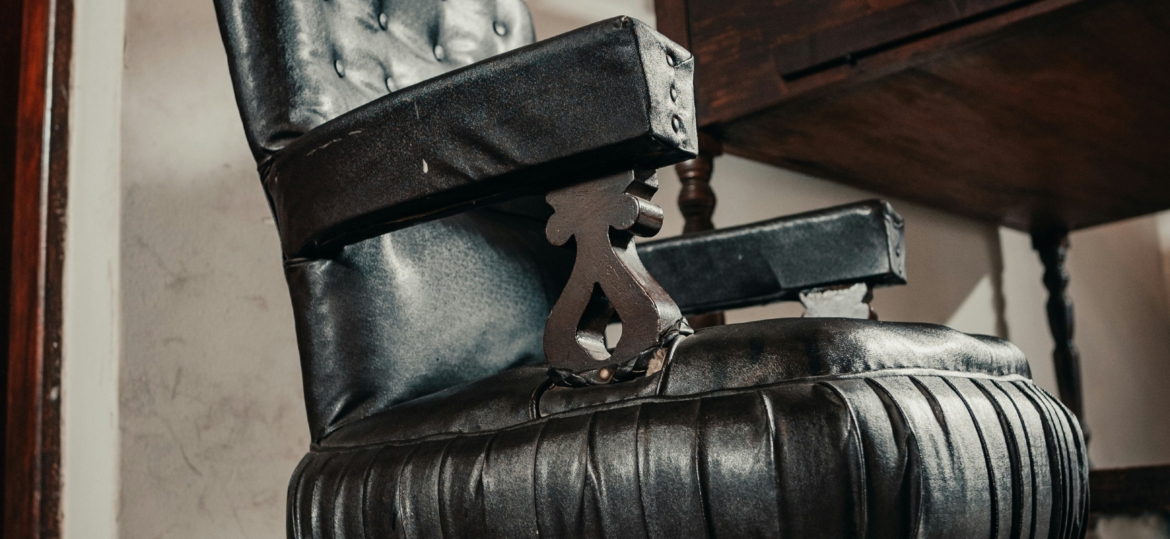
That’s worth knowing because the captain’s chair has changed considerably over time. Earlier versions were predominantly timber, whereas today’s designs can incorporate leather upholstery, buttoned backs, swivel bases and deeper cushioning. Some remain fairly compact and upright, while others have evolved into substantial leather office chairs.
What connects them is less about one decorative detail and more about their overall character. A captain’s chair tends to feel permanent. Its wooden frame and enclosed arm structure give it more visual weight than a temporary or portable chair, which is one reason the design works particularly well beside a traditional desk.
There’s also a tendency to repeat the romantic story that captain’s chairs were simply invented as special seats for ship captains. Furniture history isn’t quite that neat. The design overlaps heavily with the much broader Windsor tradition, so it’s better understood as a chair family that developed over time rather than a single nautical invention.
At Chesterfield Sofa Company, we think that’s part of its appeal. A well-made captain’s chair feels traditional without having to become a reproduction of one particular historic model.
What Is a Director’s Chair?
The classic director’s chair takes almost the opposite approach.
Instead of being designed as permanent furniture, the familiar version uses a folding frame that closes with a scissor-like action. A canvas seat and fabric back stretch between the frame members, while armrests provide a relatively upright sitting position.
Although most of us now associate the chair with film sets, its underlying chair design is far older. Folding seating has existed in various forms for centuries. The recognisable modern director’s chair developed much later and became particularly associated with film production because it could be transported, unfolded and moved around a set with very little effort.
That portability still defines most director’s chairs today.
You’ll now find outdoor versions with metal frames, drinks holders, side tables and storage pockets. Others keep the traditional timber-and-canvas appearance and are used as occasional indoor seating.
Here, however, the terminology becomes confusing again.
Some traditional furniture manufacturers also use “director’s chair” to describe a much larger leather executive chair. In those collections, the name may indicate where the chair sits within the range rather than describing the familiar folding design.
Our advice is simple: don’t buy by product name alone. Look at the frame, seat construction, dimensions and intended use. Two products called director’s chairs may have almost nothing in common beyond the wording on the listing.
Captain’s Chair vs Director’s Chair: What’s the Difference?
When comparing a captain’s chair vs a director’s chair in their traditional forms, the biggest difference isn’t really appearance. It’s what each chair was designed to do.
| Feature | Captain’s Chair | Director’s Chair |
| Construction | Usually fixed and substantial | Usually folding |
| Common materials | Hardwood, leather and upholstery | Timber or metal with canvas/fabric |
| Portability | Generally low | High |
| Seating position | Often upright and supportive | Usually upright but simpler |
| Typical setting | Study, office or traditional interior | Film set, event, occasional or outdoor use |
| Storage | Designed to remain in place | Designed to fold away |
| Visual character | Substantial and decorative | Lightweight and functional |
A captain’s chair generally prioritises permanence. Solid timber, upholstery and more substantial joinery can make it feel like part of the room rather than something brought out when extra seating is required.
With a director’s chair, portability is built into the structure. The crossed frame lets the chair collapse, while the canvas seat keeps weight down.
Neither approach is automatically better.
Someone furnishing a home office may appreciate the supportive backrest, padding and physical presence of a leather captain’s chair. Someone who regularly moves seating between rooms, events or locations could find those same qualities inconvenient.
Don’t overlook seat height and firmness
One of the easiest mistakes to make when buying any chair online is concentrating on overall dimensions while barely looking at the actual seat height.
There’s good evidence for paying attention to it. A study involving 29 older adults and 21 younger adults found that lower seat heights increased the time, movement and reported difficulty involved in standing up. Another study involving more than 100 participants similarly found that standing became more demanding as seat height dropped relative to the person’s lower-leg length.
That doesn’t mean everyone needs a tall chair. A seat can become uncomfortable if your feet don’t sit naturally on the floor.
Instead, measure a chair you already find comfortable and use its seat height as a reference point.
Real-world discussions around folding and camping chairs highlight another useful issue: advertised measurements don’t always reflect how high you actually sit once the fabric takes your weight. Some users specifically recommend measuring the chair yourself where possible and considering how much a fabric seat sags.
It’s a small detail, but far more useful than choosing between two chairs because one has a more impressive-sounding name.
Which Chair Is Better for Your Home or Office?
The captain’s chair vs director’s chair decision becomes much easier once you stop asking which design is “best” and start asking what job you need it to perform.
For a study or permanent home office, we’d usually lean towards a captain’s chair. A substantial wooden frame and upholstered seat sit naturally alongside traditional desks, bookcases and other long-term furniture. There’s also greater scope to choose leather, timber finishes and detailing that work with the rest of the room.
A folding director’s chair makes more sense when flexibility is the priority. Perhaps you want additional seating that can disappear afterwards, a chair for an occasional workspace or something you’ll regularly carry between locations.
Before choosing either, we’d consider:
- How long will you sit in it? A chair used for several working hours deserves more scrutiny than occasional seating.
- Will it need to move? Solid timber and upholstery are appealing until you’re carrying the chair up and down stairs.
- How high is the seat? Compare it with a chair you already know is comfortable.
- Does the seat sag? Fabric seats can feel very different from their stated dimensions once occupied.
- Will the chair suit the room in five years? Traditional furniture is often bought for longevity, so we’d avoid choosing purely around a temporary trend.
There’s a broader point here too. Comfort and portability frequently pull in opposite directions. Removing material can make a chair lighter, but it may also remove cushioning or support. Adding padding and a stronger structure can improve the sitting experience while making the chair heavier.
That’s why we wouldn’t judge either design solely by how many features it has.
Where Does a Captain’s Chair Sit Among Traditional Chairs?
If you’re furnishing a traditional interior, a captain’s chair isn’t your only option.
It sits somewhere between a straightforward desk chair and a larger statement armchair. Its relatively upright proportions can make it practical around a desk, while the curved arms and traditional detailing give it more presence than purely functional office furniture.
A Chesterfield chair occupies slightly different territory. Deep upholstery, buttoned leather and a more substantial profile create a stronger visual focal point. Depending on the model, it may also encourage a more relaxed seating position.
Wingback and club chairs lean further towards lounging, reading and fireside seating.
That’s why we prefer to think in terms of use rather than rigid furniture categories. Traditional furniture names tell part of the story, but they don’t tell you how a chair will actually feel in your room.
The best choice should suit your proportions, your working habits and the furniture around it.
Captain’s Chair or Director’s Chair?
Ultimately, the difference comes down to permanence versus portability.
A traditional captain’s chair is generally a solid, substantial armchair designed to become part of an interior. The familiar director’s chair is built around a folding structure, making it far easier to transport and store.
There’s plenty of variation within both categories, however, and that’s why we’d be cautious about treating either name as a strict technical definition. Look at what the chair is actually made from, how high you sit and how you intend to use it.
If you’re creating a traditional study or office and want something with more permanence, a handcrafted captain’s chair is likely to feel much more at home. At Chesterfield Sofa Company, we make our traditional leather furniture in our Lancashire workshop, with choices across leather, finish and specification to help you create a chair that works with your space rather than simply filling it.
Explore our Chesterfield office chairs and Captain’s Chair to find the right design for your workspace.