
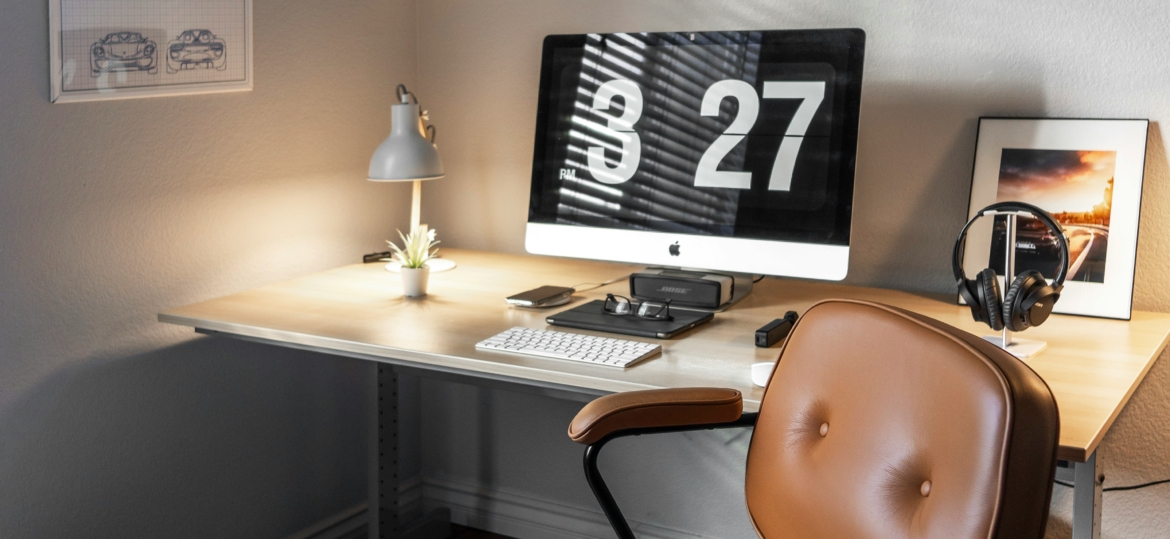
Choosing a leather desk chair can be surprisingly difficult. Two chairs can look almost identical on screen, yet feel completely different once you spend a few hours sitting in them. Leather quality varies, proportions aren’t always obvious from photographs, and words such as “luxury” or “ergonomic” don’t necessarily tell you much about how the chair has actually been made.
We’ve spent years working with traditionally upholstered leather furniture, including Chesterfield office chairs, so we know appearance is only part of the decision. A good office chair needs to suit your desk, your body and the amount of time you’ll spend using it. For some people, a contemporary ergonomic chair will be the obvious choice. For others, a Chesterfield-style chair can provide the comfort they need while bringing far more character to a study or executive workspace.
In this guide, we’ll explain what we think you should look for, from leather and construction to seat proportions, support and style, including when a Chesterfield leather chair may be the right option for your workspace.
What Should You Look for in a Leather Desk Chair?
Start with the way you intend to use the chair.
Someone spending an occasional hour dealing with paperwork has very different requirements from somebody working from home five days a week. For longer working sessions, we’d prioritise seat dimensions, back support and a comfortable working position before decorative details.
Seat depth is easily overlooked. If the seat is too deep, you may find yourself sitting forward rather than using the backrest properly. Too shallow, and your legs won’t feel adequately supported. As a useful benchmark, Health and Safety Executive guidance recommends leaving a gap of around 2 to 3 cm between the front edge of the seat and the back of the knee when setting up a workstation.
Padding deserves some scrutiny too. A heavily padded seat can feel impressive when you first sit down, but softer doesn’t automatically mean more supportive. What you’re looking for is a padded seat that distributes your weight comfortably without leaving you feeling as though you’re sinking into it.
The same principle applies to the backrest. A high back chair can provide welcome support through more of the back, but height alone isn’t proof of good ergonomic support. Pay attention to the shape of the lower portion and where it meets your back when you’re sitting naturally.
Armrests need checking against your desk as well. It’s easy to focus on how comfortable they look, then discover the chair won’t slide underneath your worktop.
Measure first. It’s a simple step and one that can save a surprisingly expensive mistake.
Which Type of Leather Should You Choose?
Not all leather is the same, so we’d be cautious about treating the words “genuine leather” as a complete description of quality.
Different hides and finishes produce different characteristics. Full-grain leather retains more of the hide’s natural surface and tends to show greater variation. Aniline leather also celebrates natural character because it has relatively little surface coating. More heavily pigmented or protected leathers create a more consistent finish and can offer practical advantages where a chair will receive frequent use.
Rather than asking whether a chair is simply “real leather”, we’d ask more useful questions. What type of leather is being used? How has it been finished? Is the chair upholstered consistently throughout, or are different materials used on less visible areas?
Those questions are particularly relevant with a Chesterfield leather desk chair because much of its appeal comes from the upholstery itself. Deep buttoning, hand-finished detailing and natural variation in the hide are highly visible, so leather choice contributes directly to the finished character of the chair rather than acting purely as a covering.
There isn’t anything inherently wrong with choosing faux leather if it suits your budget and priorities. It offers a consistent finish and can be straightforward to wipe clean. What it won’t generally do is develop the same patina as quality natural leather.
Should You Choose a Chesterfield Leather Desk Chair?
If you want your office chair to feel like part of the room rather than simply a piece of workplace equipment, a Chesterfield is well worth considering.
A traditional Chesterfield office chair takes many of the visual characteristics associated with Chesterfield sofas and adapts them for desk use. Depending on the design, that can include deep buttoned leather upholstery, rolled or shaped arms, individually applied studs and a substantial seat, often paired with a swivel base and adjustable height.
The result is quite different from a typical modern office chair. Instead of disappearing into the workspace, a Chesterfield tends to become one of its focal points.
We think this makes them particularly well-suited to home studies, executive offices and workspaces furnished with timber desks or more traditional furniture. They can also work surprisingly well in contemporary rooms where the aim is to introduce one piece with more texture and character.
There is a practical trade-off, though. A Chesterfield chair is generally more substantial than a slim task chair, so dimensions need careful attention. Thick arms, a deeper seat and a wider back can all affect how easily it fits beneath or around your desk.
For somebody working at a computer for eight hours every day, we’d still assess comfort and posture before style. Check the seating position, back support and adjustment available rather than assuming traditional upholstery automatically means comfort.
For the right user, however, a Chesterfield offers something that many office chairs don’t: it can function as both office seating and a proper piece of furniture. When the laptop is closed, it still looks at home in the room.
Traditional Leather Office Chair or Modern Design?
The choice doesn’t really need to be framed as traditional versus ergonomic.
Modern office chairs often prioritise independently adjustable components. You’ll commonly find movable armrests, adjustable lumbar support and highly flexible backrests designed specifically around prolonged desk work.
A traditional leather executive chair approaches comfort differently. Rather than exposing lots of mechanisms, it may rely more heavily on seat shape, cushioning and overall proportions, with adjustments such as height and tilt incorporated more discreetly.
Chesterfield office chairs sit firmly within this traditional approach, but there’s plenty of variation within the style itself. Some designs are imposing, high-backed executive chairs, while others are more compact and suitable for smaller studies.
Think about how the chair will actually be used. If your working day involves long uninterrupted periods at a screen, adjustability may carry more weight. If the room serves several purposes and you want furniture that looks considered even outside working hours, a traditionally upholstered chair can offer a better balance between appearance and function.
Neither route is inherently better. A good purchase is the one that fits the person, the desk and the room.
How Long Should a Leather Office Chair Last?
You’ll often see remarkably precise lifespan claims attached to office chairs. We’d treat them cautiously.
How long a chair lasts depends on far more than the leather covering it. Frequency of use, sunlight, heat, construction, foam quality and the moving components underneath the seat all influence its working life.
That’s especially important when you’re investing in a handcrafted or premium chair. We’d look beyond the visible leather and pay attention to the base, frame, stitching, fixings and mechanisms as well.
One advantage of traditional furniture construction is that the chair isn’t necessarily viewed as disposable. With a well-made Chesterfield, the leather can develop character as it ages rather than simply looking worn. Marks, tonal variation and gradual softening can become part of its appearance.
Care still plays a role. Keep natural leather away from persistent direct heat and strong sunlight where practical, remove dust gently and follow the care recommendations provided for the specific leather finish.
How Do You Choose the Right Chair for Your Workspace?
Before choosing a leather desk chair, measure the space where it’s actually going to live.
Check the height beneath the desktop, particularly if the chair has fixed arms. Measure the available width if your desk has drawer units or pedestal cabinets underneath. A generously proportioned Chesterfield chair can look beautifully balanced behind a large desk but overwhelm a compact workstation.
Next, think about how the room itself is furnished.
Traditional brown or antique-effect leather works naturally with oak, mahogany and other timber furniture. Deeper shades can create a more formal executive feel, while lighter or less conventional leather colours can make a Chesterfield feel much more contemporary.
It’s also worth looking at the chair from behind.
Most product photography concentrates on the front, yet you’ll often see the back more frequently when walking into your office. On a Chesterfield design, deep buttoning, leather coverage and the overall silhouette can make the chair feel much more substantial and considered within the room.
Above all, avoid buying on one feature alone. Expensive leather doesn’t rescue poor proportions. Deep buttoning won’t compensate for a chair that can’t fit beneath your desk. Equally, a highly adjustable chair may still feel wrong if you dislike looking at it every day.
The chair works as a whole, so judge it that way.
Common Questions About Leather Office Chairs
Are Chesterfield office chairs suitable for desk work?
Yes, provided the proportions and adjustment suit your body and desk. Many Chesterfield office chairs combine traditional upholstery with practical features such as swivel bases and adjustable seat height. For longer working periods, we’d still check seat depth, back support and arm position carefully.
Are leather desk chairs comfortable?
They certainly can be, but leather alone doesn’t determine comfort. Seat depth, cushioning, backrest shape, height and your working position all play a bigger role than the upholstery material.
Is real leather better than faux leather?
It depends on what you want from the chair. Quality natural leather can age attractively and develop individual character, while faux leather usually offers a more uniform appearance at a lower price.
Can you use a traditional leather chair all day?
Potentially, yes, provided its dimensions and support suit you. For prolonged computer work, check seat height, back support, arm position and desk clearance particularly carefully.
How should you clean leather office furniture?
Follow the manufacturer’s instructions for the specific leather finish. Routine dust removal and careful treatment of spills are generally preferable to aggressive cleaning.
Choosing a Leather Desk Chair With Real Character
A good office chair shouldn’t make you choose between appearance and usability. Leather quality deserves attention, but so do seat depth, support, arm height and the strength of the components underneath.
For some workspaces, a modern ergonomic chair will make the most sense. For others, a Chesterfield leather chair offers a much more distinctive alternative, combining practical office seating with the character of traditionally upholstered furniture.
That’s particularly valuable in home offices and studies, where the chair remains part of the room long after the working day has finished.
If you’re looking for a leather desk chair with a more traditional feel, explore our range of handcrafted Chesterfield office chairs. With the right size, leather and finish, a Chesterfield can become much more than somewhere to sit. It can help define the whole workspace.