
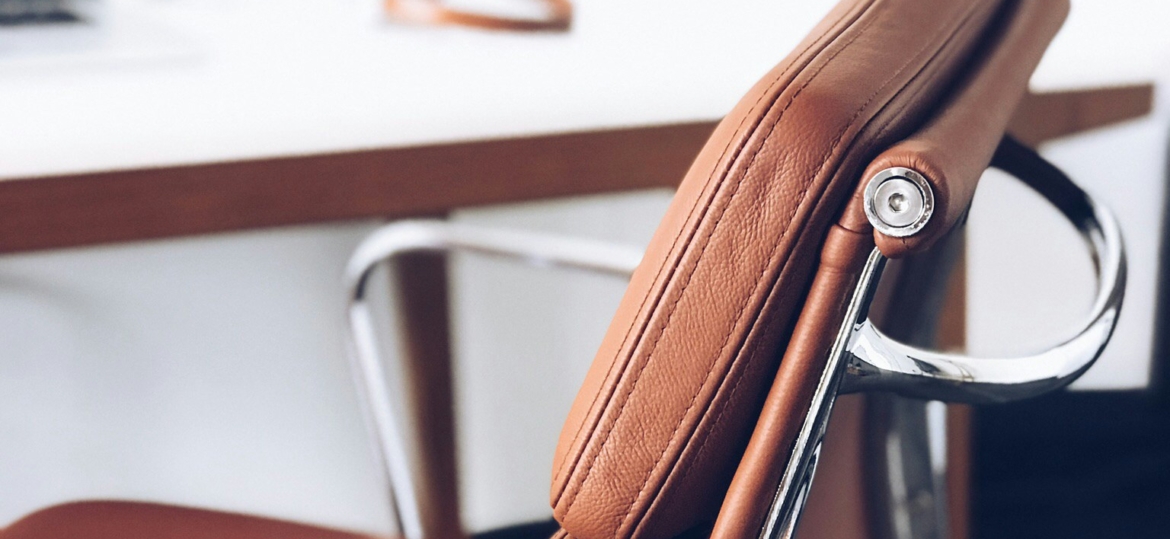
A Chesterfield desk chair should do more than make your office look impressive. If you’re going to spend hours working from it, the chair also needs to suit your desk, your preferred sitting position and the amount of movement you need throughout the day.
That’s where choosing one can become harder than it first appears. Traditional Chesterfield detailing gives these chairs their character, but two designs with deep buttoned upholstery and leather upholstery can feel very different once you’re actually sitting at a desk. Back height, arm position, seat construction and the base underneath you all change how the chair works in practice.
At Chesterfield Sofa Company, we make our office chairs by hand in our Lancashire workshop, with different designs and configurations available depending on how you want to use your space. In this guide, we’ll look beyond appearance and help you choose the chair that genuinely works for your office.
What Makes a Chesterfield Desk Chair Different?
The obvious starting point is the design. Button tufting, traditional leather, sculpted backs and polished timber immediately separate a Chesterfield office chair from the stripped-back task chairs found in many workplaces.
But we’d argue that appearance is only half of the appeal.
A well-made leather Chesterfield office chair sits somewhere between traditional furniture and functional office furniture. You still get the character you’d expect from a Chesterfield, but the chair can also incorporate practical features such as swivel movement, tilt and adjustable height.
This distinction is worth paying attention to when you’re shopping. A chair with rolled arms and deep buttons might look like a traditional leather desk chair, but that doesn’t automatically make it suitable for regular desk work. Consider how it moves, how its dimensions relate to your desk and whether you can adjust your seating position comfortably.
The UK’s Health and Safety Executive takes a similarly practical view of workstation seating. Its guidance states that work chairs should allow easy movement and a comfortable position, with seat height being adjustable. It also highlights the importance of positioning your keyboard just below elbow height and supporting your lower back appropriately.
In other words, don’t choose a chair in isolation. Choose it as part of the desk setup you’re actually going to use.
Captain’s, Director’s or Gainsborough Chair?
We offer three distinct Chesterfield office chair designs, and the right choice isn’t simply whichever one looks most impressive in a photograph.
The Captain’s Chair
Our Captain’s Chair has a curved back with turned spindles inspired by traditional ship railings. It has plenty of classic design character without feeling as visually substantial as some high-backed alternatives.
You can choose between a traditional standing base or tilt-and-swivel action, along with plain or buttoned seat options.
It’s particularly well suited to a home office or study where you want traditional desk seating but don’t necessarily want a large chair dominating the room.
The Director’s Chair
If you’d prefer more visual presence, the Director’s Chair takes things in a different direction.
Its high rounded back and padded arms create a more substantial executive chair, while the hardwood five-star base keeps it practical around a desk. The timber can also be stained and polished according to your preferred finish.
For a larger study, professional office or room with a substantial desk, its proportions often feel more at home than a smaller design would.
There’s a practical consideration here too. Don’t assume a higher back automatically makes a chair more comfortable. Some people like the more enclosed feel, while others prefer greater freedom around their shoulders. Comfort is personal, so chair proportions deserve as much thought as the upholstery.
The Gainsborough Chair
The Gainsborough has arguably the strongest traditional furniture character of the three.
Its polished wooden frame is paired with a deep buttoned seat and back, giving it a distinctive silhouette that works particularly well where the chair itself is intended to become a focal point. A five-star hardwood base, castors and swivel configuration bring modern functionality underneath that more traditional appearance.
If exposed timber, buttoning and craftsmanship are central to the look you’re creating, the Gainsborough is well worth considering.
The easiest way to narrow the choice is to ask what you want from the chair first. If you want something elegant but comparatively understated, start with the Captain’s Chair. For a higher-backed executive look, consider the Director’s. If prominent timber and deep buttoning are part of the appeal, look towards the Gainsborough.
Choose for Your Desk, Not Just Your Office
One of the easiest mistakes to make is thinking about how a Chesterfield desk chair will look in the room without checking how it’ll actually interact with the desk.
Armrests are a good example. Office-chair owners regularly report finding a chair comfortable until they realise its arms stop them moving close enough to their desk. Some end up lowering or removing the arms purely to get into a better working position.
It’s much easier to avoid that problem before ordering.
Measure the distance from the floor to the underside of your desk, then check the width and height available around the chair. If your desk has drawers, side pedestals or a narrow knee space, measure between those too.
Also think about what happens when the chair moves. A five-star swivel base needs more usable floor area than the width of the seat alone suggests.
Height deserves similar attention. HSE guidance recommends arranging a workstation so your shoulders can remain relaxed, with the keyboard just below elbow height. It also recommends leaving around 2 to 3 cm between the front of the seat and the back of the knee.
Those are useful reference points, but they don’t mean everybody needs to sit in exactly the same position. Your height, desk, equipment and preferred working style all influence what feels right.
Movement is often overlooked as well. A Chesterfield swivel chair can be useful if you’re regularly reaching for drawers, paperwork or another part of your desk. Rather than repeatedly twisting in a fixed seat, the chair moves with you. HSE guidance also recommends avoiding prolonged static postures and arranging frequently used equipment within easy reach.
That’s why we’d put functionality ahead of softness when choosing a working chair. A seat that feels wonderfully plush for five minutes isn’t necessarily the one you’ll prefer several hours into the day.
Leather, Colour and the Character of Your Office
Choosing the leather can be the enjoyable part, but there’s still more to consider than picking your favourite shade.
Real leather develops character as it’s used. Changes in tone and natural variation aren’t necessarily flaws to be avoided. They’re part of what can make a leather chair look better once it has been lived with rather than permanently showroom-new.
Colour changes the impression of the chair just as dramatically.
Dark brown or oxblood leather can reinforce the traditional character of a study, particularly alongside timber furniture. Black can create a sharper executive look. Lighter or less conventional colours can bring Chesterfield detailing into a more contemporary home office without making the room feel overly traditional.
You don’t need to match everything, either.
In fact, we’d often advise against automatically choosing the same leather colour as every other upholstered piece in the room. A Chesterfield chair can work better as a deliberate contrast. Pairing dark leather with a dark desk, dark shelving and dark flooring may sound coordinated, but in a small room it can make each piece disappear into the next.
Think about the chair as an individual piece of furniture.
The same principle applies to the upholstery style. A buttoned seat gives you more traditional detailing and a firmer, more structured appearance. A plain seat creates a slightly cleaner look. Neither is universally better.
Consider how the chair will be used and what you personally like sitting on rather than assuming the more decorative option must be the premium choice.
What Should You Check Before Ordering?
Before choosing your chair, we’d recommend taking a few simple measurements. It isn’t the most exciting part of buying new furniture, but it can prevent far more frustrating problems later.
Check:
- the height from the floor to the underside of your desk
- the clear width between desk drawers or pedestals
- whether the chair arms can move comfortably towards the desk
- the floor space available for a swivel base and castors
- access through doorways, halls and stairs
Room scale is worth considering too.
A large Director’s Chair can look perfectly proportioned behind a substantial executive desk but feel oversized beside a compact writing desk. Equally, choosing a chair that’s too small in a large office can make the whole arrangement feel slightly disconnected.
This is one reason we think of a handmade office chair differently from mass-produced desk seating. You’re not simply filling an empty space under a desk. You’re choosing furniture that needs to work physically, visually and practically within a specific room.
Find the Right Chesterfield Chair for Your Office
There isn’t one Chesterfield desk chair that’s automatically right for everybody.
The best choice comes from looking at how you actually work. Consider whether you’d prefer a higher or more open back, whether swivel and tilt would make your working day easier and how much room you have around the desk. Then think about the leather, buttoning and timber finishes that will bring the rest of the office together.
Our Captain’s Chair, Director’s Chair and Gainsborough Chair each approach those requirements differently, while retaining the craftsmanship and traditional character you’d expect from Chesterfield furniture.
If you’re ready to find yours, explore our range of Chesterfield office chairs or speak to our team about the leather, finish and configuration that would work best in your space. We’ll help you create a chair that looks at home in your office and feels right when you actually sit down to work.