
Introduction
With its deep button tufting, distinctive rolled arm design, and rich upholstery, the Chesterfield sofa is one of the most recognisable pieces in interior design. Because of its bold shape, many people worry it might dominate the space or make their home feel too traditional.
In reality, learning how to style a Chesterfield sofa is about understanding how the sofa works with the rest of your living room. Its strong shape naturally draws attention, so the surrounding furniture, colours and textures should support it rather than compete with it.
This guide explains how to style a Chesterfield sofa in a practical way that works for modern homes. Instead of focusing only on cushions and throws, we will explore layout, colour choices and furniture combinations. These small decisions can make a big difference to the overall look of the room.
Start With the Sofa’s Colour and Presence
The first step in understanding how to style a Chesterfield sofa is recognising that it has a strong visual presence. The deep tufting, curved rolled arm, and often dark upholstery make it stand out immediately.
Trying to hide this feature rarely works. A better approach is to allow the Chesterfield sofa to anchor the room while the rest of the design balances its weight.
Choosing a Colour Direction
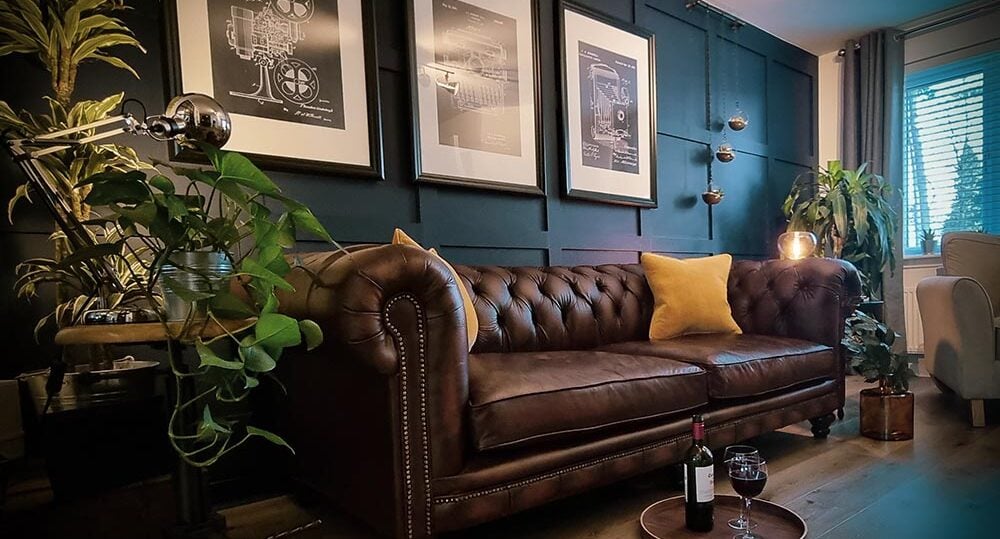
Traditional Chesterfields often appear in rich leather colours such as brown, burgundy or oxblood. These shades add warmth and character to a living room, but they can also make a space feel heavy if everything around them is dark.
To keep the room balanced:
- Dark leather sofas work well with lighter walls or rugs
- Velvet Chesterfields in deep colours pair nicely with neutral décor
- Fabric Chesterfields in grey or beige allow more freedom with accessories
The goal is not simply to match colours. Instead, aim to create contrast where it helps the sofa stand out.
For example, a dark sofa placed against pale walls highlights the shape of the rolled arm and makes the design feel intentional.
How the Material Affects Styling
The material of the Chesterfield sofa also influences how the room should look.
Leather usually feels more traditional and formal. Rooms built around leather Chesterfields often include wooden furniture, warm lighting and textured fabrics.
Velvet creates a softer and more luxurious feel. In these spaces, metallic lighting, marble surfaces and layered textiles often work well.
Fabric Chesterfields suit relaxed interiors. Linen or cotton upholstery pairs easily with modern coffee tables, simple décor and lighter colour palettes.
Understanding the material helps guide the styling of a Chesterfield so the room feels natural and balanced.
Use Accessories to Add Depth
After deciding on colour and material, the next step in how to style a Chesterfield sofa is adding accessories that improve the look of the space.
Many guides simply recommend cushions, but the real value comes from choosing items that work with the sofa’s design.
Cushions That Add Texture
Because the Chesterfield already has deep tufting, smooth cushions can sometimes look flat. Textured fabrics often work better.
Materials such as wool, boucle or velvet add contrast and help soften the shape of the rolled arm.
Instead of filling the sofa with pillows, use a few well-chosen cushions. This allows the details of the Chesterfield sofa to remain visible. Too many accessories can hide the design features that make the sofa special.
Throws That Soften Leather
A leather Chesterfield sofa can sometimes feel slightly firm in large living rooms. A throw draped over one arm or across the back introduces warmth and softness.
Keep the arrangement simple. A loosely folded throw often looks more natural than one that is perfectly styled.
Rugs That Bring the Seating Area Together
Rugs play an important role when learning how to style a Chesterfield sofa. They help define the seating area and make the room feel more organised.
Interior design studies often show that living rooms feel more balanced when furniture sits on a rug rather than directly on the floor.
Choose a rug large enough to sit under the sofa and coffee table. This creates a clear seating area instead of separate pieces of furniture.
Subtle patterns usually work best. Busy designs can compete with the Chesterfield’s buttoned texture.
Position the Sofa as the Room’s Focal Point
Placement has a major impact on how to style a Chesterfield sofa successfully. Because of its shape and structure, the sofa naturally becomes the focal point of the room.
The rest of the layout should support this feature.
A Classic Living Room Layout
Most homes place the Chesterfield sofa against a wall. This layout works well in medium-sized living rooms where the sofa acts as the centrepiece.
Accent chairs can face the sofa with a coffee table between them. This arrangement encourages conversation and creates balance.
Floating the Sofa in Larger Rooms
In larger spaces, moving the sofa away from the wall can look more refined. Floating the sofa helps define a seating area while keeping the rest of the room open.
This approach works particularly well in open-plan homes.
One advantage of a Chesterfield is that the back is just as detailed as the front. The tufting allows the sofa to look elegant from every angle.
Using a Chesterfield in Other Rooms
Many people assume the Chesterfield sofa belongs only in the living room, but it works well in other spaces, too.
Consider placing one in:
- A study or home library
- A wide hallway
- A bedroom seating area
These spaces often benefit from the character and history that a Chesterfield brings.
Pair the Sofa With Complementary Furniture
Another important part of styling a Chesterfield sofa involves choosing furniture that balances its strong look.
Because the sofa already draws attention, nearby furniture should usually feel lighter.
Coffee Tables That Balance the Sofa
Traditional interiors often pair leather Chesterfields with wooden coffee tables. The warmth of wood complements the leather and keeps the room cohesive.
In modern homes, glass or metal tables can look better. Their lighter design offsets the heavier structure of the Chesterfield sofa.
Lighting That Highlights the Details
Lighting can make a big difference when styling a Chesterfield.
Warm floor lamps placed beside the rolled arm highlight the depth of the button tufting. This creates shadows that show off the sofa’s texture.
Sculptural floor lamps or modern lighting fixtures can also contrast nicely with the curved shape of the sofa.
Accent Chairs That Add Balance
Chairs placed around the Chesterfield should not copy its design. Instead, contrast usually creates a stronger visual effect.
For example:
- Mid-century wooden chairs introduce lighter lines
- Minimalist armchairs keep the space uncluttered
- Upholstered lounge chairs soften formal interiors
This approach prevents the room from feeling overly traditional.
Styling a Chesterfield in Different Interior Styles
Many guides about styling Chesterfield sofas assume the sofa belongs only in classic interiors. In reality, it can work in several different design styles.
Traditional Interiors
Classic spaces highlight the heritage of the Chesterfield sofa. Leather upholstery, antique furniture and warm lighting reinforce its historical character.
Rich rugs and framed artwork complete the look.
Modern Minimalist Spaces
Minimalist homes often benefit from a Chesterfield because it introduces texture into simple rooms.
Neutral upholstery works best. A tan or cream Chesterfield sofa adds warmth without overwhelming the space.
In these interiors, fewer accessories usually look better. A couple of cushions and a single throw can be enough.
Contemporary Luxury Rooms
Velvet Chesterfields work beautifully in contemporary spaces. Deep colours combined with metallic lighting, marble surfaces and large artwork create a dramatic effect.
Larger art pieces often work better than many small frames above the sofa.
Conclusion
Understanding how to style a Chesterfield sofa means recognising the sofa’s character and working with it rather than against it. Its rolled arm shape, deep button tufting and luxurious materials naturally make it the focal point of a room.
With the right colour palette, carefully chosen accessories and thoughtful furniture placement, a Chesterfield sofa can transform a living room into a stylish and inviting space.
If you are planning to introduce a Chesterfield into your home, start by thinking about how it will interact with the rest of the room. When the surrounding design supports the sofa, the result feels balanced, comfortable and timeless.